FREE SHIPPING FOR ORDERS OVER €100 FOR GREECE


The story of the kompoloi
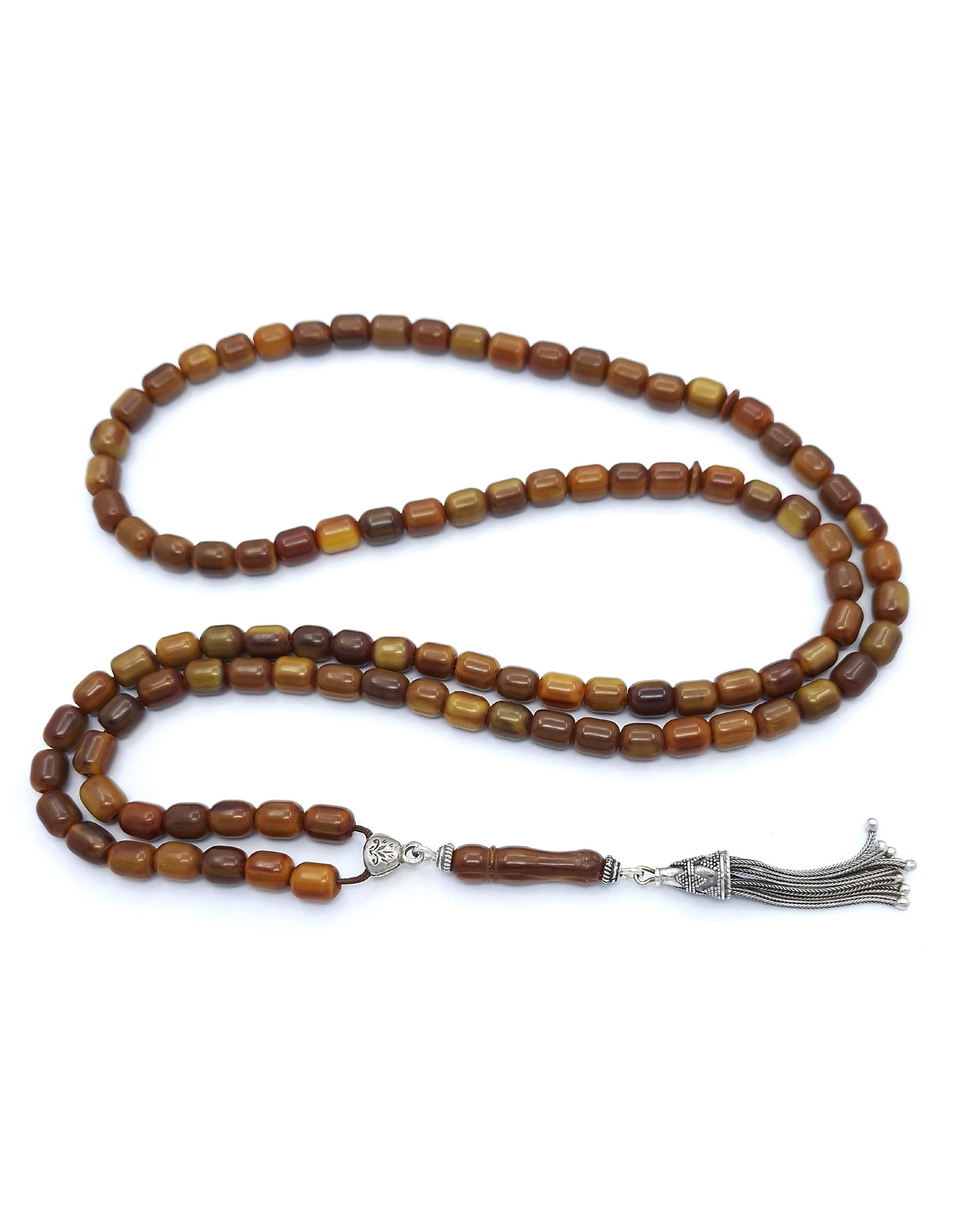
The History of the Komboloi
The history of the kompoloi, and more broadly of prayer beads, dates back to ancient times and is closely connected to humanity’s need for spiritual focus, repetition, and inner calm. Across different cultures and religions, the use of beads followed a common principle: rhythm and repetition as tools that support concentration and mental stillness.
The Hindu and Buddhist Prayer Garland
According to tradition, the origins of prayer beads can be traced to Northern India around 500 BC. One of the earliest accounts speaks of a spiritual teacher who asked a student, unfamiliar with counting, to recite 108 prayers. To assist him, the teacher gathered 108 fruit pits, pierced them, threaded them onto a cord, and tied the ends together. This simple object allowed prayers to be counted through touch rather than numbers, forming the earliest concept of prayer beads.
In the Indian epic Ramayana (circa 200 BC), these prayer beads are referred to as “japamala,” derived from the Sanskrit word japa, meaning prayer or repetition. Each bead, known as a mala, was believed to represent a deity from the Hindu pantheon. Initially made from simple seeds, prayer beads gradually evolved into more elaborate objects crafted from amber, sandalwood, crystals, ivory, and animal bone, gaining aesthetic and symbolic value beyond their spiritual function.
Around 800 AD, Buddhism reached Tibet, carrying prayer beads with it. Tibetan prayer beads also consisted of 108 beads, with larger marker beads placed at intervals, symbolizing the Buddha, the teachings, and the community, reinforcing their spiritual meaning.
The Islamic Prayer Beads
The history of Islamic prayer beads is more clearly documented. Through contact with Indian and Buddhist traditions, prayer beads were introduced into Islamic culture and became integrated into religious practice.
Islamic prayer beads consist of 99 beads, divided into three groups of 33, separated by marker beads. The number 99 represents the 99 names of Allah, while an additional bead is often used to signify the completion of a full cycle of prayer.
Western Prayer Beads and the Rosary
In the Western Christian world, prayer beads spread primarily through the Crusades and became widely used during the Middle Ages. Archaeological findings from 13th-century graves reveal intact prayer beads made of beads strung on fine wire, often placed as grave goods or protective talismans.
A key figure in the structured use of prayer beads was Saint Dominic (1170–1221), who contributed to the formalization of bead-based prayer within Catholicism. The general term chaplet was used to describe various forms of prayer bead strings, which did not always follow a fixed number of beads but varied depending on devotion and practice.
The most widely recognized and standardized form is the Catholic Rosary, which consists of 59 beads in total: 55 small beads used for the Hail Mary prayers and 4 larger beads used for the Our Father, arranged into five decades. The crucifix at the beginning of the rosary is not included in the bead count, although it remains an integral part of the prayer structure.
Over the centuries, as prayer beads traveled across regions and cultures, they gradually took on roles beyond their original religious purpose. An impressive variety of materials has been used in their creation, including seeds, knots, ceramics, stone, bone, horn, semi-precious stones, shells, coral, yusuri, teeth, fossils, wood, dough, bread, and later synthetic materials, as long as they could form a bead comfortable to hold and handle.
The story of the komboloi does not end with its religious origins. Instead, it continues to evolve, adapting to the needs and cultural identity of each place it reaches. In Greece, the komboloi developed a distinct identity and cultural significance, explored in more detail in the article on the Greek komboloi
https://www.eftehnon.com/en/uncategorized-en/the-greek-kompoloi/
while in modern times it transformed into a secular object of relaxation, aesthetics, and personal expression, as presented in the article on secular komboloi
https://www.eftehnon.com/en/uncategorized-en/secular-komboloi/.
Together, these perspectives form a continuous cultural journey that remains alive today.
© Eftehnon – This article is protected by copyright. It may be shared only with clear reference to the source.